
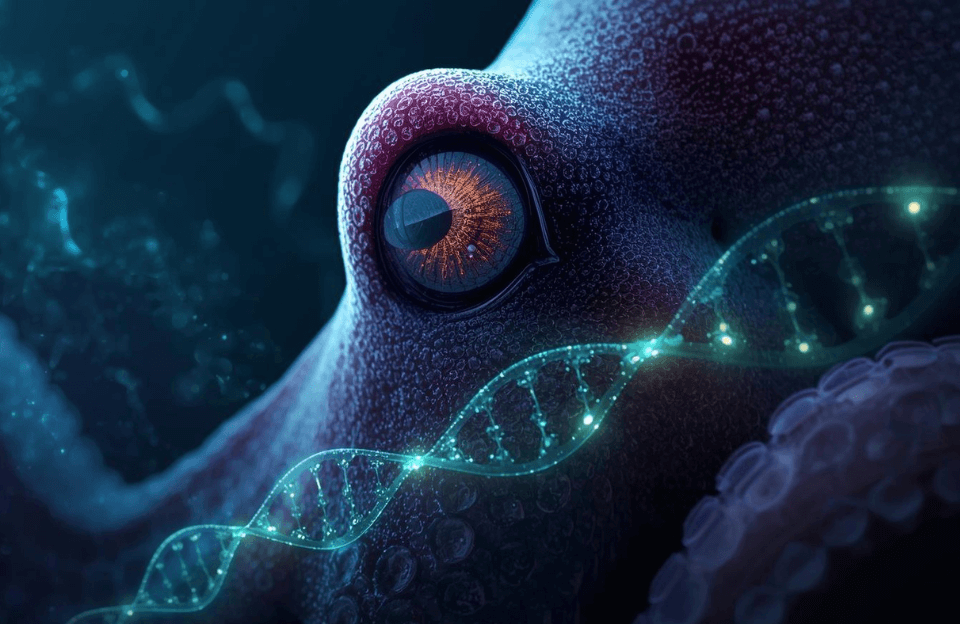
Introduction: The Mystery of Cephalopod Intelligence
Octopuses and squids are among the most intelligent invertebrates on Earth. They solve puzzles, use tools, navigate mazes, and even exhibit play-like behaviors. But unlike mammals or birds, they evolved intelligence independently, from a very different branch of the tree of life.
Recent research suggests that a surprising genetic quirk may help explain their remarkable cognitive abilities. This “genetic oddity” could be a key piece of the puzzle in understanding how these clever creatures think, learn, and adapt.
The Unusual Genetics of Cephalopods
Unlike humans and other vertebrates, octopuses and squids have some of the most unusual genomes in the animal kingdom.
Key Genetic Features
- An unusually large number of RNA editing sites, allowing them to modify proteins after transcription
- Unique expansions of genes related to neural development
- Specialized genes for neuron growth and synapse formation
This combination of features creates an extraordinary capacity for rapid adaptation and fine-tuned neural function.
RNA Editing: Rewriting the Rules
RNA editing is a process where the instructions in RNA molecules are altered before they are translated into proteins. In most animals, RNA editing is limited, but cephalopods take it to extremes.
Why It Matters
- It allows cephalopods to create protein diversity without changing their DNA
- Neurons can be fine-tuned for environmental conditions
- May contribute to learning, memory, and complex behaviors
Essentially, RNA editing gives octopuses and squids a flexible “software layer” on top of their genetic code, helping their nervous systems respond rapidly to challenges.
How This Genetic Quirk Boosts Brainpower
The nervous system of octopuses is highly decentralized: about two-thirds of neurons are located in their arms. Combined with RNA editing and other gene expansions, this makes for a highly adaptable and responsive network.
Implications for Intelligence
- Rapid response to environmental stimuli
- Fine motor control for tool use and hunting
- Problem-solving and memory formation
- Complex social and predatory behaviors
The interplay between genetics and nervous system structure may explain why cephalopods are so unusually intelligent for invertebrates.
A Window into Evolution
Cephalopods evolved intelligence independently from mammals and birds—a phenomenon called convergent evolution. Studying their genomes offers clues not only about cephalopods themselves but also about the general principles underlying cognitive evolution.
Broader Implications
- Shows that intelligence can evolve along very different genetic pathways
- Suggests RNA editing may be a more important factor in neural complexity than previously thought
- Inspires research in neuroscience, AI, and adaptive robotics
Understanding these mechanisms could even inform new technologies that mimic flexible, decentralized intelligence.
Final Thoughts: Nature’s Genetic Experimenters
Octopuses and squids continue to astonish scientists with their intelligence and adaptability. The discovery of their unusual RNA editing and neural gene expansions provides a tantalizing glimpse into how evolution can create clever, adaptable minds in surprising ways.
In a way, these cephalopods are nature’s own genetic experiment—proof that intelligence can emerge through unexpected and unconventional pathways. As research continues, we may learn not only how these animals think, but also gain fresh insights into the fundamental biology of intelligence itself.